Digital Correspondence: transhistorical perspectives on language, materials and corpora
Welcome to the Digital Correspondence Community Interest Group

Join Our Mailing List
Learn about events and activities within the CIG and from further afield via our mailing list

Correspondence, both historical and contemporary, provides a window on human interactions, our personal experiences and social lives. This group explores the linguistic and material facets of correspondence, broadly defined, to understand more about communication practices across the centuries. We focus not only on what was written, and by who, but also how these texts create meaning. We welcome explorations of correspondence from across the centuries and in diverse media (handwriting, print, digital) and evaluate what language analysis can tell us: what are the trends, the themes, the shared concerns over time? How are language resources used to convey identity, construct relationships, and achieve aims and objectives, spanning the personal and the political?
Digital tools are at the heart of our explorations. Corpus collections, including letters, print epistles, emails, and text messages, have transformed our ability to describe and interpret this text type. We explore how our data and its digitization enables or impedes our ability to research effectively. Key themes for discussion and potential development include the factors shaping the availability of correspondence data and how to accommodate that in the creation of correspondence corpora; the capacity to format and capture linguistic and other semiotic modes efficiently, transparently and accessibly; and the areas of interest that digital investigations, in particular, can open up for those working with correspondence across academia, cultural heritage organisations, archives and education.
Join our JISC mailing list for regular updates about our events and activities
Our Co-ordinators
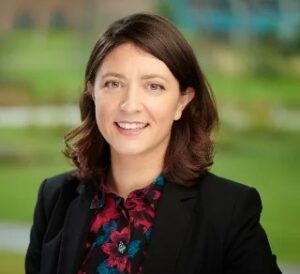
Hi, my name is Imogen Marcus and I am a Senior Lecturer in English Language in the department of English and Creative Arts at Edge Hill University, Ormskirk, UK. I research variation and change in the English language, present and past, and the relationship between language and technology. I have engaged with medieval letters written in Middle English and Anglo Norman, speech-related language in Early Modern English manuscript letters, and modern forms of correspondence such as email and instant messaging. A recent publication is Marcus, I and Maden-Weinberger, U. 2026. ‘Coordinating and Subordinating Conjunctions in Five Genres Across the History of English’, part of a Journal of English Linguistics Special Issue Complicating Corpus Methods in Historical English Language Studies. I have also developed scribal identification techniques and, with the assistance of research assistant Dr Ursula Maden-Weinberger, created the Transhistorical Corpus of Written English, so I am very interested in transhistorical approaches to correspondence of various forms, as well as issues around the creation of digital tools, data and its digitization. I am currently using a lexical sociolinguistic approach to investigate the vocabulary of defamation in early modern English. I am looking forward to exploring these issues, hearing about new research and sharing ideas with other CIG members.
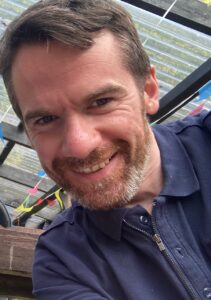
Hi, I’m Chris Fitzgerald, I work in the Department of English Language and Literature at Mary Immaculate College, Limerick, Ireland. My research has mostly been concerned with the linguistic analysis of oral histories. I find oral histories fascinating for a number of reasons and I have tried to promote the use of oral histories for language studies as I see oral historians doing a lot of the same work as corpus linguists who are interested in spoken discourse. I recently edited a book published by Bloomsbury that brought together oral historians who are interested in language and linguists who are interested in oral history. I also like to look at historical letters and am currently working on an article on 19th century threatening letters from Ireland and England. I look forward to exploring these interests and others with CIG members!
Previous Co-ordinators
- Dr Rachele De Felice, Lecturer in Applied Linguistics and English Language (Open University).
- Dr Mel Evans, Lecturer in English Language (with Digital) (University of Leeds).
- Dr Helen Newsome-Chandler, Research Fellow in Forensic Linguistics and AI (Nottingham Trent University). Previously Postdoctoral Fellow at UCD.
The CIG’s origins
The idea for the Digital Correspondence CIG emerged from a conversation between Rachele, Helen and Mel at the 2022 ICAME conference at Anglia Ruskin university. Rachele was chairing a panel on corpora and letters, and Helen and Mel were presenting some work on Anglo-Scots royal correspondence. It struck us that the panel included papers on correspondence from diverse periods of history, but that digital methods and (often implicit) theory were shared across many of the talks.
When the call for the UK-Ireland Digital Humanities Association Community Interest Groups was released a few months’ later, we took it as a sign!
Members Directory
CIG Members can be part of our Members Directory, which shares details of our members’ expertise, interests, to enable collaboration and as recognition of our community.
Upcoming Events
Call for Papers
Immigrant and Emigrant Correspondence
Thursday, 14 January 2027, 10.00-13.00
We welcome contributions to a free, online event about immigrant and/or emigrant correspondence. This event is open to everyone interested in this topic, including (but not limited to) linguists, historians, digital humanities researchers and education researchers/teachers. Postgraduate students are also welcome. You can either attend as an audience member or present. The event will also feature a lead speaker (details below).
Your presentation can range from 5-15 minutes, and can be a work in progress report, or a paper with more concrete findings.
To attend, please fill in the registration form here. Personal data will be kept on a secure, confidential Google form and will be deleted after the event.
If you would like to present, please also send a title and a short abstract (150-200 words) to imogen.marcus@edgehill.ac.uk by Friday 4th December 2026. Any questions in the meantime, please get in touch with Imogen at the above email or co-coordinator Chris Fitzgerald (christopher.fitzgerald@mic.ul.ie).
Research areas might include: (historical) sociolinguists; (historical) pragmatics, (historical) semantics, (historical) discourse analysis, oral history, history ‘from below’, digital humanities approaches.
A variety of methodological perspectives and approaches are welcomed, e.g. quantitative, qualitative, philological, corpus linguistic, ethnographic, archival, multi-modal. The event is open to researchers working on correspondence in both modern contexts (e.g. email, instant messaging) and historical contexts (e.g. letters, dispatches).
Topics might include:
- self- and other- reference in writing of (and about) immigrants/emigrants, e.g. reference in relation to stance, positioning, indexicality
- ego documents
- dialect
- the recovery and preservation of linguistic heritage
- immigrant monolingualism and bilingualism, and/or ideological/evaluative comments relating to them
- multilingualism and letters
- language policies, in either historical or modern contexts
- language contact, e.g. practices and hierarchies in transnational language histories
- enregisterment
- (conceptual) spoken and written discourse in immigrant/emigrant correspondence
- immediacy and distance in the language of immigrant/emigrant correspondence
- oral history of emigrant experiences
- orthography and spelling
- syntax
- gender, e.g. women’s voices in transit
- age, e.g. children’s voices in transit, or discourse about childhood/children
- emotions in immigrant/emigrant correspondence
- humour about/satire of the culture the emigres join
- assimilation anxiety
Lead Speaker: Carolina Amador Moreno, ‘A transhistorical approach to ego documents – a perspective from Irish English’.
Length: 45 minutes with space for comments and questions.
This talk will discuss the value of ego-documents in historical sociolinguistics, engaging with issues related also to (historical) pragmatics, (historical) discourse analysis, oral history, etc. The focus will be on private correspondence, using the Corpus of Irish English Correspondence (CORIECOR) to illustrate some of the research activity that has been conducted using this corpus since it was devised in 2008.
By turning to CORIECOR, we will take a closer look at how Irish English was recorded through letter writing. CORIECOR contains a large body of personal letters mainly to and from Irish emigrants, sent for the most part between Ireland and the United States, Canada, Great Britain, New Zealand, and Australia, from approximately 1750 to 1940. The talk will offer some reflections on how diachronic corpora can help us identify patterns of consistency across time, as well as trends in usage, and instances of slower types of linguistic change across language varieties. Some of the examples that will be discussed will allow us to see how certain linguistic choices made in the letters show indexicality.
We will also reflect more broadly on how the oral history of emigrant experiences is expressed in the context of written communication in present times, bringing in the transhistorical angle that allows us to measure modern migration experiences across time. The talk will close with some reflections on the recovery and preservation of linguistic heritage; questions related to the use of modern technologies will serve as an invitation to discuss differences between traditional and digital archiving.
Past Events:
What is this and why is it here?!
Challenges and curiosities in correspondence
Friday June 14, 2-3.30pm

An informal and interactive session that explored the unusual, surprising, and inexplicable things we have found in our own archival research into correspondence, past and present.
The session consisted of 5-10 minute presentations about puzzling finds from correspondence data: a signature in an unexpected place in a letter, an off-topic phrase in an email corpus, an addressee that doesn’t fit the social network of the writer, or even a mole skin(!)… After the presentations, colleaguess from the research and archival worlds discussed and responded to the issues raised.
We hope to produce the proceedings of the event into an Open Educational Resource.
ROUNDTABLE: Ethics, Access and Sustainability
17th April 2024: 2-3.30pm

Our second event of the academic year is a roundtable on three key points related to digital correspondence archives:
- What are the ethical concerns around using individuals’ correspondence for research, especially where consent was not freely given?
- Who should, or can, have access to this data? How do we balance openness in research against individuals’ privacy?
- How can we ensure the long-term sustainability of these projects and databases, which are often developed with significant investment of resources?
Our Speakers:
• Professor Tim Grant and Dr Sarah Atkins, Aston Institute for Forensic Linguistics, Aston University – https://www.aston.ac.uk/research/forensiclinguistics/databank
• Dr Jack Orchard and Mark Rogerson, Electronic Enlightenment, Bodleian Library, Oxford University – https://www.e-enlightenment.com/index.html
• Jodie Double, Head of Digital Content and Copyright, University of Leeds Libraries – https://library.leeds.ac.uk/
LAUNCH: Conversations about Correspondence
Wednesday 22nd November 2023: 12.30-2pm
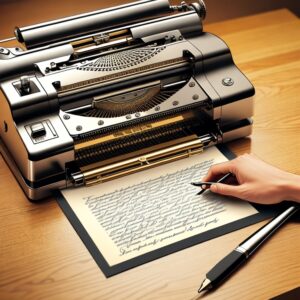
‘Machine writing letters’ generated by images.ai
This informal roundtable discussed the theoretical, methodological and practical considerations of working with correspondence using digital frameworks and techniques. Our three speakers work with a range of correspondence materials – present-day and historical – and will offer perspectives based on their experience of academic, GLAM and professional contexts.
SPEAKERS:
- Julia Gillen, Lancaster University
- Callum McKean, The British Library
- Niall O’Leary, Digital Humanities & IT Consultant