
Members’ Briefing
2025-2026
We are delighted to share some highlights of our activities from another busy year for the Association, including updates on advocacy and engagement, Community Interest Groups, the Association’s governance, and our Annual Event.
As always as we reflect on the activities of the Association, we would like to thank everyone who has contributed their time and expertise, whether by attending or presenting at the Annual Event, participating in a Community Interest Group, or otherwise sharing their thoughts and ideas.
We remain committed to hearing from you about how we can improve. If you have any feedback for us, please let us know by filling in this form. Likewise, if you are interested in contributing to the work of the Association this year, please get in touch at uk-ie.digitalhumanities@sas.ac.uk.
Annual Event in Southampton
The Association held its fourth Annual Event this June, hosted by the University of Southampton and online. This year’s event was themed around sustainability, one of the Association’s core values. While writing the call for proposals, there was a lively discussion about possibilities for interdisciplinary research on discourses, policies and attitudes surrounding sustainability, and about practices for exploring the methods and implications of developing sustainable technologies, infrastructures and projects. Sessions (papers, roundtables, posters/demos, workshops/tutorials, provocations and pitches) reflected the complexities of sustainability as a concept, goal and practice. Speakers tackled topics such as AI in humanities research, community-orientated practices around minimal computing, heritage collection data management, and software sustainability.
The event comprised over 50 presentations, posters, workshops and discussions, including a plenary roundtable on the topic of ‘The Persistence of Infrastructure’, in which professionals from the British Library, DARIAH Ireland, Llyfrgell Genedlaethol Cymru / The National Library of Wales, the University of Glasgow and the Software Sustainability Institute discussed what sustainability means to them in their digital work.
We were delighted to welcome colleagues from the UK, Ireland and internationally, and would like to thank all those who joined us for their contributions. We are also grateful to everyone who shared their feedback from the event. An event evaluation and reflections may be found here.
The 2026 Annual Event was generously supported by the School of Advanced Study and The Social History Archive, and the plenary panel by the John Coffin Memorial Trust. We would also like to thank our friends at Southampton Digital Humanities for hosting and supporting the delivery of this event.
Watch a recording of the plenary panel here.
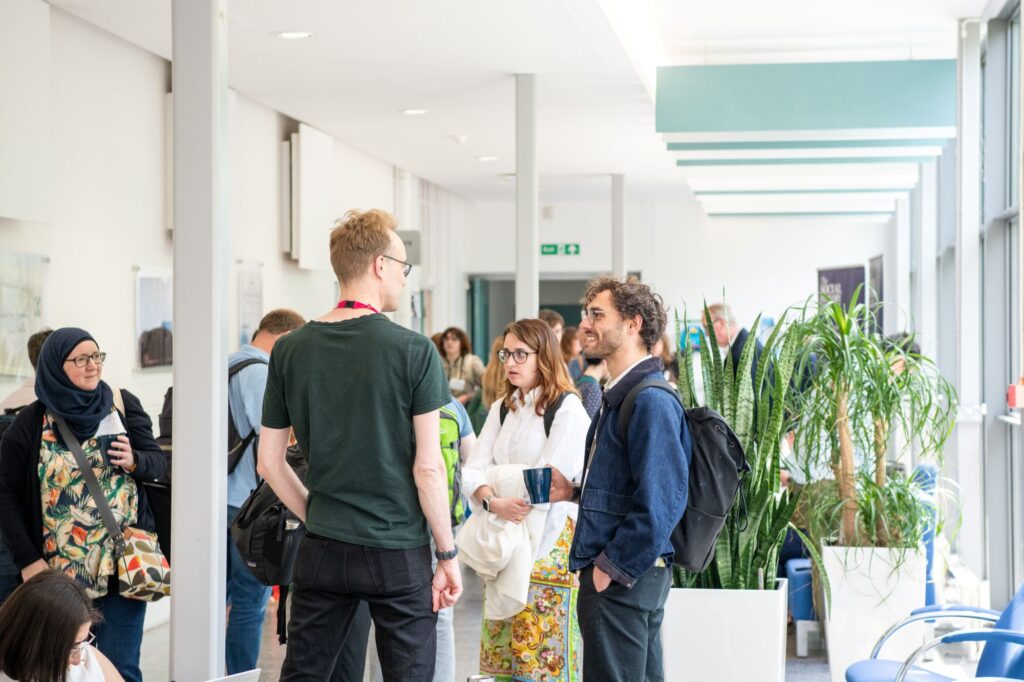
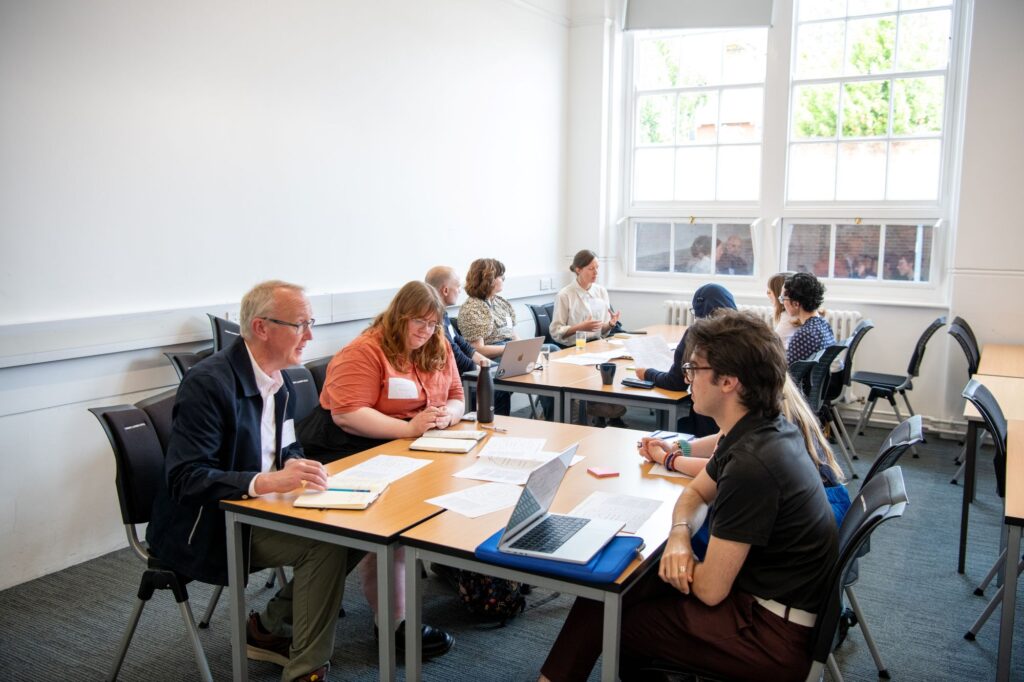
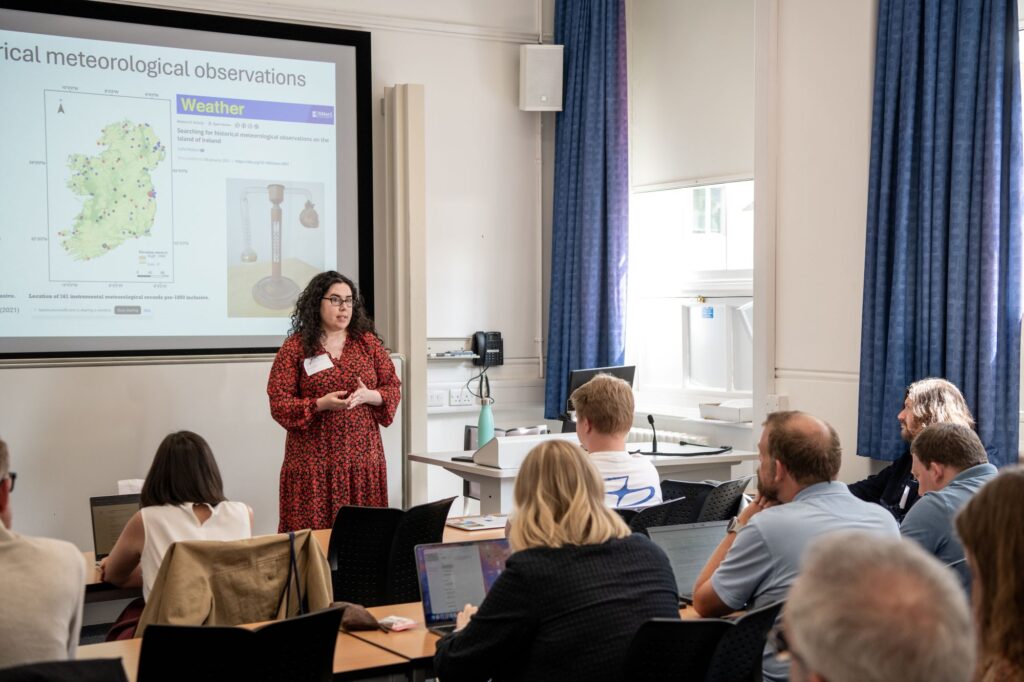
Photographs of the Annual Event by Sonny Pedcenko
UKRI Grant and Community Manager
The UK Research and Innovation Digital Research Infrastructure Programme has awarded £300,000 to the UK‑Ireland Digital Humanities Association to support a major programme of work running from February 2026 to March 2028. The award (grant number UKRI4065) will strengthen advocacy, community development, and long‑term sustainability for digital humanities across the UK and Ireland, supporting a programme of research and engagement to map digital humanities stakeholders across sectors, develop shared value propositions for digital humanities, and produce guidance to embed these messages within institutional and policy contexts.
The funding will further enable the Association to strengthen its role as a convenor across Higher Education, the GLAM sector, and the technological and creative industries; to evolve governance and membership structures; to develop sustainable income streams; and to continue building partnerships with key digital research infrastructure organisations. The funding is also supporting the ongoing development of the Association’s Community Interest Groups, more information on which below.
With the support of the grant, we are glad to have appointed a Community and Advocacy Manager, Jenny McHugh, to lead the delivery of this programme. Many of you will have interacted with Jenny in the context of the Annual Event, the Small Grants Scheme, the Advocacy and Engagement Fellowship, the Community Interest Groups, or other activities. Jenny has also been supporting the establishment of our membership model and our communications via the website, mailing list and social media. Her appointment and leadership on a range of community activities with the support of this grant, has been transformative, and we are delighted to have her on board.
Pilot Small Grants Scheme
The pilot small grant scheme was launched on 1 May 2026. We offered grants of up to £3,000 / €3,449.26 to support early career research and practice in collaboration with the GLAM (galleries, libraries, archives and museums) sector. There was a total of £6,000 / €6,898.71 available overall, sufficient to support two or more projects, depending on budget. The aim was to foster collaboration with the GLAM sector and increase opportunities for early career researchers and practitioners.
We hosted an online briefing session on 18 May to introduce the scheme and answer any questions. 31 people registered and 15 attended on the day. An audio recording of the session was shared after the event for those who registered but could not ultimately attend.
In total, we received 31 applications for the scheme with good representation from all regions covered by the Association. Three were funded (a success rate for the pilot scheme of 9.7%). The reviewers (drawn from the Association Collective) noted the very high quality of applications. In no particular order, the successful applications were:
- Alice Sage’s project on ‘Digital methods to map the life and work of Josefina de Vasconcellos (1904-2005)’, in partnership with the Armitt Museum and Library (Cumbria).
- Alexandra Morris’s project on ‘Collections Uncovered: Supporting Inclusive Participation in Disability History at the British Library’.
- Sun Park’s project on ‘Shared Traditions of Two Irelands: A Digital Linking of Folklores through Collections of National Museums NI and University College Dublin’.
Each project has proposed an array of different digital outputs and will also produce a blog post for the Association’s website at the end of the six-month duration.
Overall, the scheme had positive feedback as a way to support early career researchers and practitioners and to encourage cross-sectoral collaboration. We hope to be able to run it again in the future.
Association Governance
This year the Association has been taking steps to implement the Governance Proposal published last year by the Governance Working Group. Many thanks to those community members who left feedback on the proposal – we have been reading and reflecting on your comments. In response, we will be looking to develop and formalise our approach to the items raised in our new Roadmap, which the Collective is currently drafting after a successful strategy meeting on 17 September.
We have also been preparing to launch our pilot membership scheme in 2027, based on the model outlined in the Governance Proposal. This work has included an Equality Impact Assessment (EIA) to help ensure that the proposed model does not ‘present needless barriers to participation or disadvantage protected groups’. We will complete two additional EIAs during the first 12 months of the pilot scheme to ensure that membership remains as inclusive as possible (in line with the Association’s core values). Further announcements about the Association’s membership will follow in the coming months.
Advocacy and Engagement
Our inaugural Advocacy and Engagement fellow, Claire Carroll, engaged in networking activities that highlighted the importance of widening participation in Association events and funding schemes. Her report put forward actionable suggestions that the Association has invested in supporting – the small grants pilot scheme and regional events. Her case study also showcased the importance of advocating for inclusive and creative research across the humanities. Working with colleagues at the University of Lancaster, Claire showcased Litcraft’s potential for creative writing, game play and literary studies to promote literacy and engagement with ‘classic’ texts.
Her fellowship report also enabled follow-up research by a Southampton MSc Digital Humanities (Data Science) student as part of his work placement module. Will Foden’s audit highlighted engagement with Association activities across the UK, and explored barriers to wider participation from colleagues in Ireland, particularly from the GLAM sector.
In August, we began recruitment for our 2026-2027 Advocacy and Engagement Fellow. This year the call focused on the theme of ‘Openness and Transparency’ in the Digital Humanities – one of the Association’s core values. The call received 18 applications – three times the number of applications for the previous round – proposing exciting projects to support advocacy and engagement activities oriented towards promoting transparency and openness in DH and GLAM sector collaborations. We will be announcing who our new fellow is in the coming weeks and the exciting project they will be working on, so keep a weather eye on our news page.
Community Interest Groups
In 2026, the five existing community interest groups continued their work in their respective areas. The Digital Humanities Climate Coalition (DHCC) CIG continued their development of a toolkit to include information on maximal computing and AI, as well as developing an online version of their ‘Sustainability’ Game for single players. They also produced several new resources to support the community, including a Project Self-Assessment Tool and a guide to interpreting the UKRI’s Environmental Sustainability Guidance for DH. The Digital Correspondence CIG underwent a process of handing over chairing responsibilities at the beginning of the year, with Imogen Marcus and Chris Fitzgerald appointed as the new co-ordinators. The Multilingual DH CIG joined forces with the DARIAH-EU’s Multilingual DH Working Group and Research Data Management Working Group to participate in an event to expand training materials around use of diverse linguistic sources in September 2026. The ‘Protecting the Investigator in Traumatic Research Areas’ (PeTRA) CIG continued work towards hosting a workshop to bring together policy and training developers in best ethical practice for scholars and practitioners, and also brought on board a third co-chair, Sarah Wride, to further support and enhance the work. Finally, the Research Software Engineers CIG decided ultimately to retire their group as they felt they had achieved the chief aims of their group, after conducting a survey of the RSE landscape of the community. They identified a strong overlap with other organisations in this area and felt they could better advocate for RSEs as arts and humanities representatives within these existing networks. We support their decision and hope to find other ways to continue supporting RSEs and other digital Research Technical Professionals (dRTPs) in the future.
In May 2026, the UK-IE DHA opened up calls for interest for new CIGS to further complement its work. Following a highly competitive call, 6 new CIGs were granted status: Humanities and Data Science; Arts and Humanities Digital Infrastructures; Cultural Heritage Open Scholarship Network (CHOSN); UK-Ireland Web Archive Research Network (UK-IE WARN); Digital Humanities Pedagogies; and Feminist Digital Humanities (see our website for more information). This brings the total number of CIGs supported by the UK-Ireland DHA to 10, which represents a significantly broader community of practitioners and scholars willing to engage in grass-roots level work to contribute to best practice and policy within the digital humanities. If any of these groups speak to your interests or research, please reach out to their co-ordinators to join a CIG.
Thanks to funding from the UK Arts and Humanities Research Council, we are also very pleased to be able to offer some further funding to support the activities of all 10 of the Community Interest Groups. This ranges from small ad-hoc funding to support relevant travel and costs, to a mid-sized grant scheme that will provide funding for small events, to a larger funding scheme to allow CIGs to develop longer-term research projects and networks. CIG funding was announced on 28 October. To find out more about how your CIG might benefit, please get in touch with your CIG co-ordinators.
New Members (mailing list, LinkedIn, & socials)
We are pleased to say that the Association has continued to grow, with 185 subscribers joining our mailing list between July 2025 and September 2026, and 251 colleagues registering for our 2026 Annual Event at Southampton and online.
This year, we also added a LinkedIn account to our social media platforms, in addition to our pre-existing BlueSky and Mastodon accounts. With 2,250 followers to date and a high level of engagement from our audience, it’s safe to say we think it is going well. To keep up to date with all the latest announcements and events, feel free to follow us on your favoured platform.
Looking Forward
In the coming year, the Association will implement the pilot phase of its membership scheme, as outlined in the 2025 Governance Proposal, and begin running formal elections for its Executive Board. We will also be outlining a new roadmap for the next phase of the Association, as we continue to grow and collaborate with new people and organisations. We hope to add to our growing Resource Hub, with, for example, working papers on career trajectories within digital humanities and the excellent advocacy work being undertaken by our fellow and the members of our CIGs.
Perhaps the biggest change is that the Annual Event is going on a brief hiatus in 2027, so that we can support our colleagues involved in the organisation of DH2027 at Galway in June. This will include funding bursaries to members of the Association hoping to attend. In the meantime, we will be busy launching our pilot Regional Event Series, which will kick off with a meeting at Trinity College Dublin on 4 March 2027 and cohosted with DARIAH-Ireland. This will be followed up with a second event in Leeds on 7 April 2027.
We continue to invite your contributions to, and feedback on, the work and development of the Association. You can contact us at uk-ie.digitalhumanities@sas.ac.uk and share your thoughts via our feedback form.
Thank you to all our members for your continued support and engagement. We look forward to further collaboration in the year ahead!